09 / 15AI-native / founder-built productAntler MENA · DIFC · Apr – Jun 2026
AI-Native Product Design-to-Code Antler MENA

ReplylessAI

ReplylessAI is an AI-native email client I conceived, designed, and AI-built during the Antler MENA cohort. I used a structured product workflow—from framing and interaction design through functional implementation and deployment—to make email feel organised, actionable, and calm. Explore the live product at replyless.ai ↗
Project
ReplylessAI — AI-built email platform developed during Antler MENA
My Role
Entrepreneur in Residence · Founder / AI Product Builder
Timeline
Apr – Jun 2026 · Antler MENA · DIFC
Tools
Figma · AI Coding Agents · React/Vite · Supabase · Vercel
Deliverables
Product strategy · UX/UI · Design system · Functional web app · Marketing site
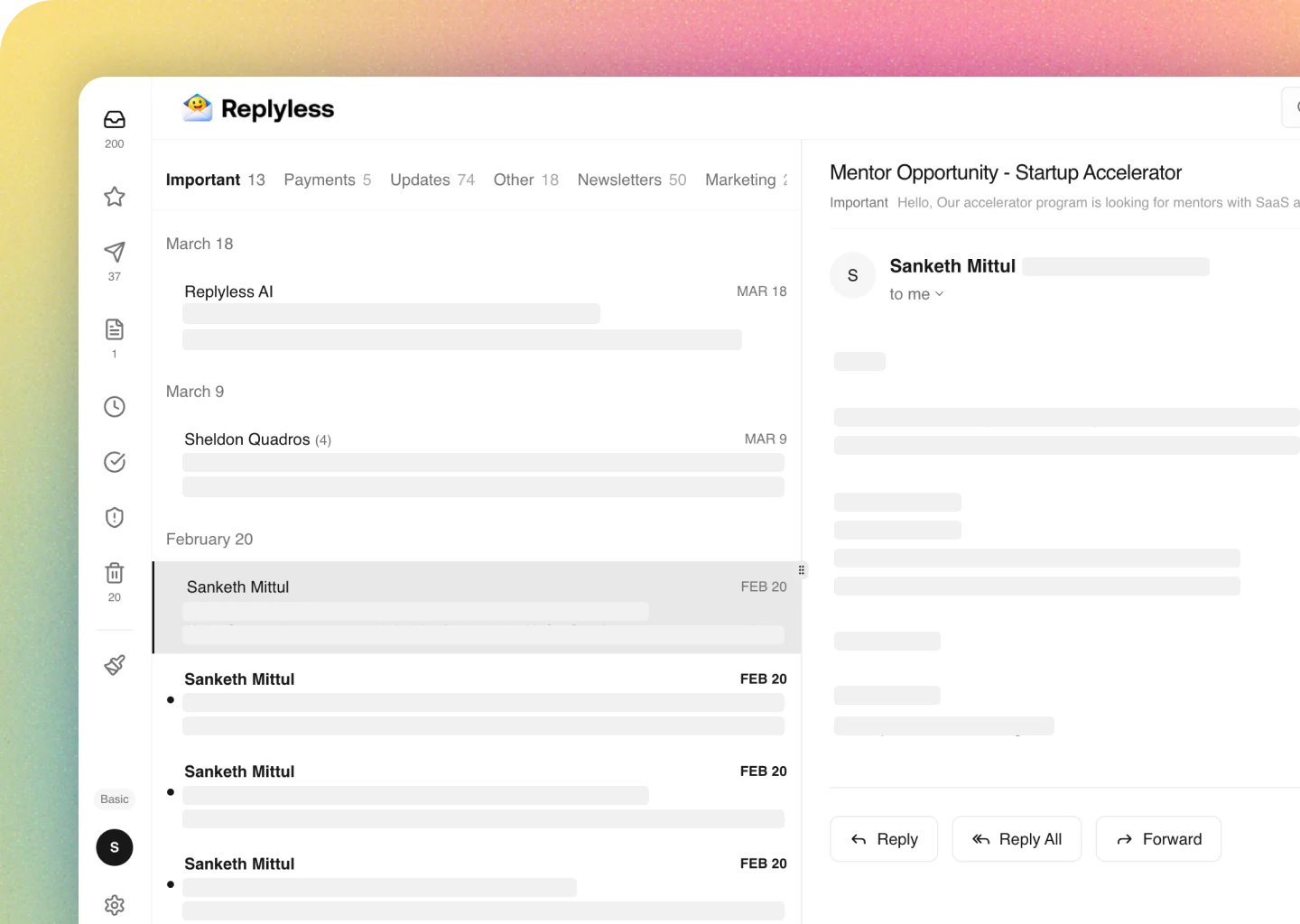
ReplylessAI — product overview
ReplylessAI / Selected product view
70+
Early users
0→1
From product thesis to working platform
Antler
Built during the MENA founder cohort
Live
Product experience and marketing site shipped
Problem
Traditional inboxes give urgent client work and low-priority updates the same visual weight.
Ownership
Product thesis, UX/UI, design system, AI-assisted implementation, and launch.
Constraints
Move from concept to a working platform inside the Antler MENA cohort.
Outcome
A live AI-built email product and marketing site shipped from a single product workflow.
01

The Opportunity

Email still runs a huge part of professional work, but the core interface hasn’t really changed. Important client threads, payments, newsletters, and updates all arrive in the same place and demand the same visual attention.

ReplylessAI was designed around a simpler product promise: automatically separate what matters, shorten the path to action, and let AI help without turning the inbox into a black box.

"The inbox isn’t broken because email is old. It’s broken because everything looks equally urgent."
— ReplylessAI product thesis

I approached it as a workflow product, not just a prettier mail client. The design had to help users scan faster, trust the system’s categorisation, and take action with less cognitive overhead.

Within the Antler MENA cohort, I carried that thesis beyond a prototype. I translated product strategy, interaction design, and system behaviour into a working platform through a fully AI-first, design-to-code workflow.

Core audience: founders, freelancers, and operators managing high volumes of mixed-priority email every day.
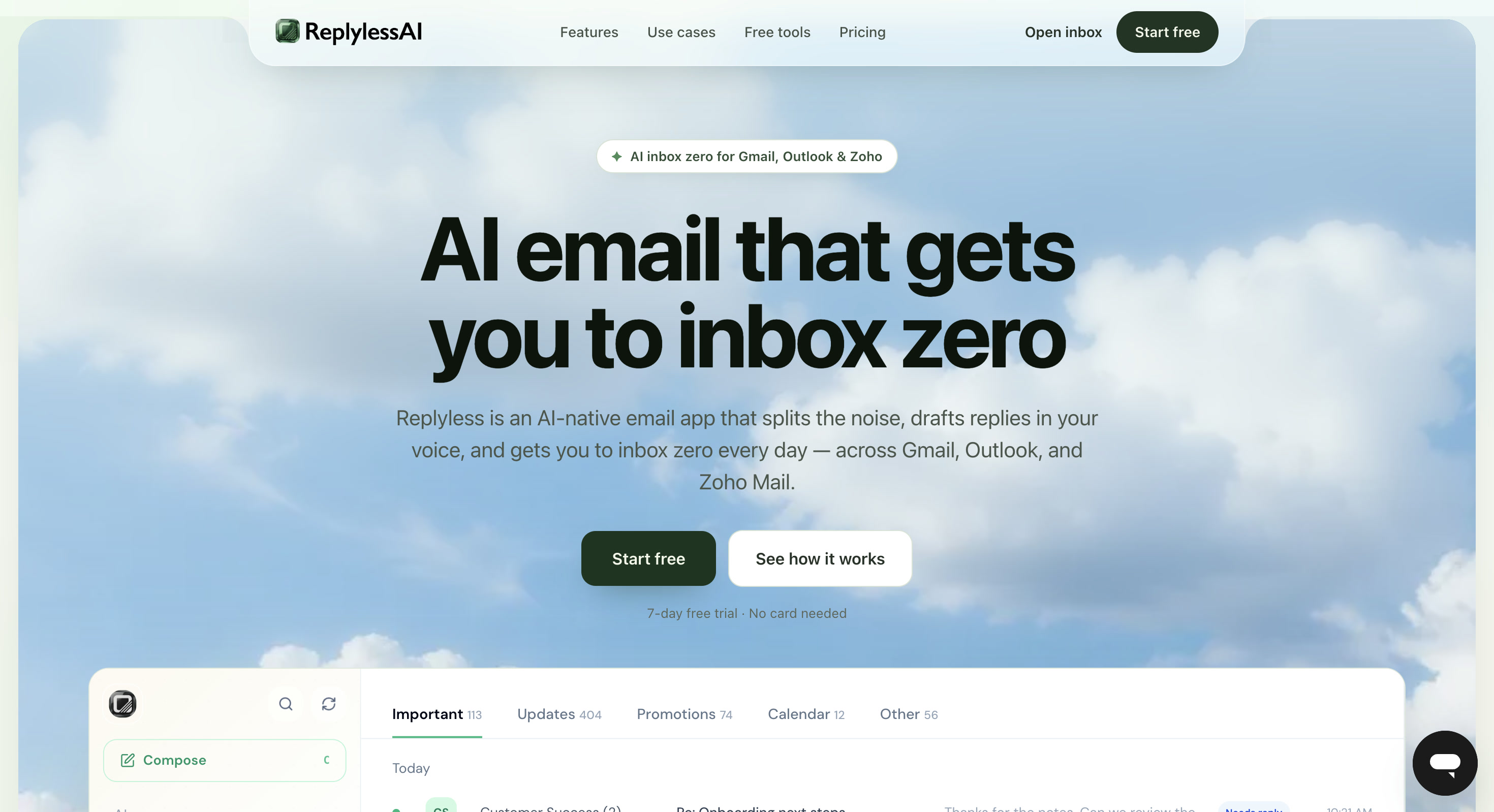
ReplylessAI landing-page hero presenting an AI-native email experience for Gmail, Outlook, and Zoho Mail
AI-Native Email Positioning · A focused inbox-zero promise paired directly with the working product experience
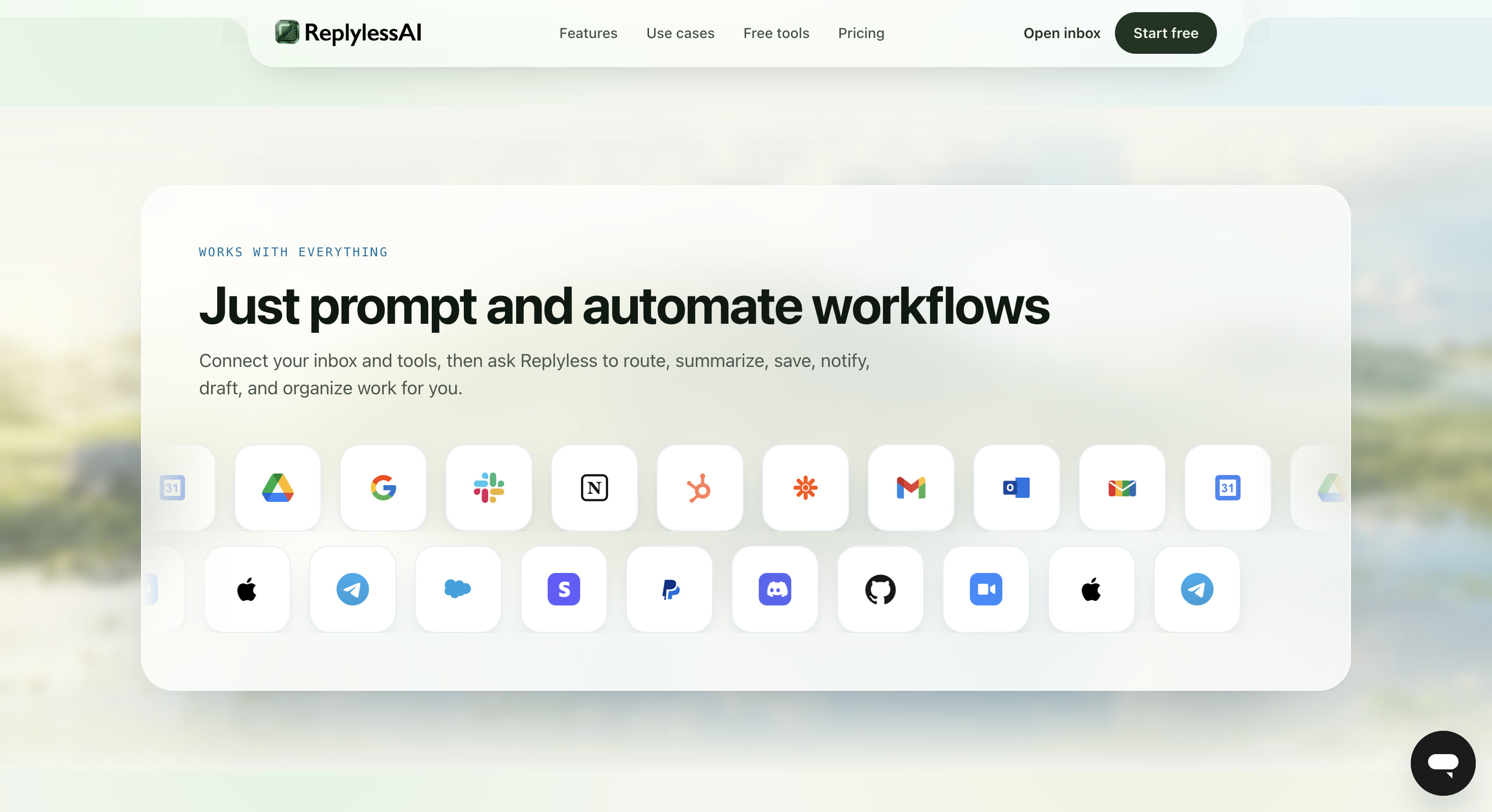
ReplylessAI landing-page section showing prompt-based workflow automation across email and connected productivity tools
Connected AI Workflows · Prompt-led automation across inboxes and everyday productivity tools makes the platform’s breadth tangible
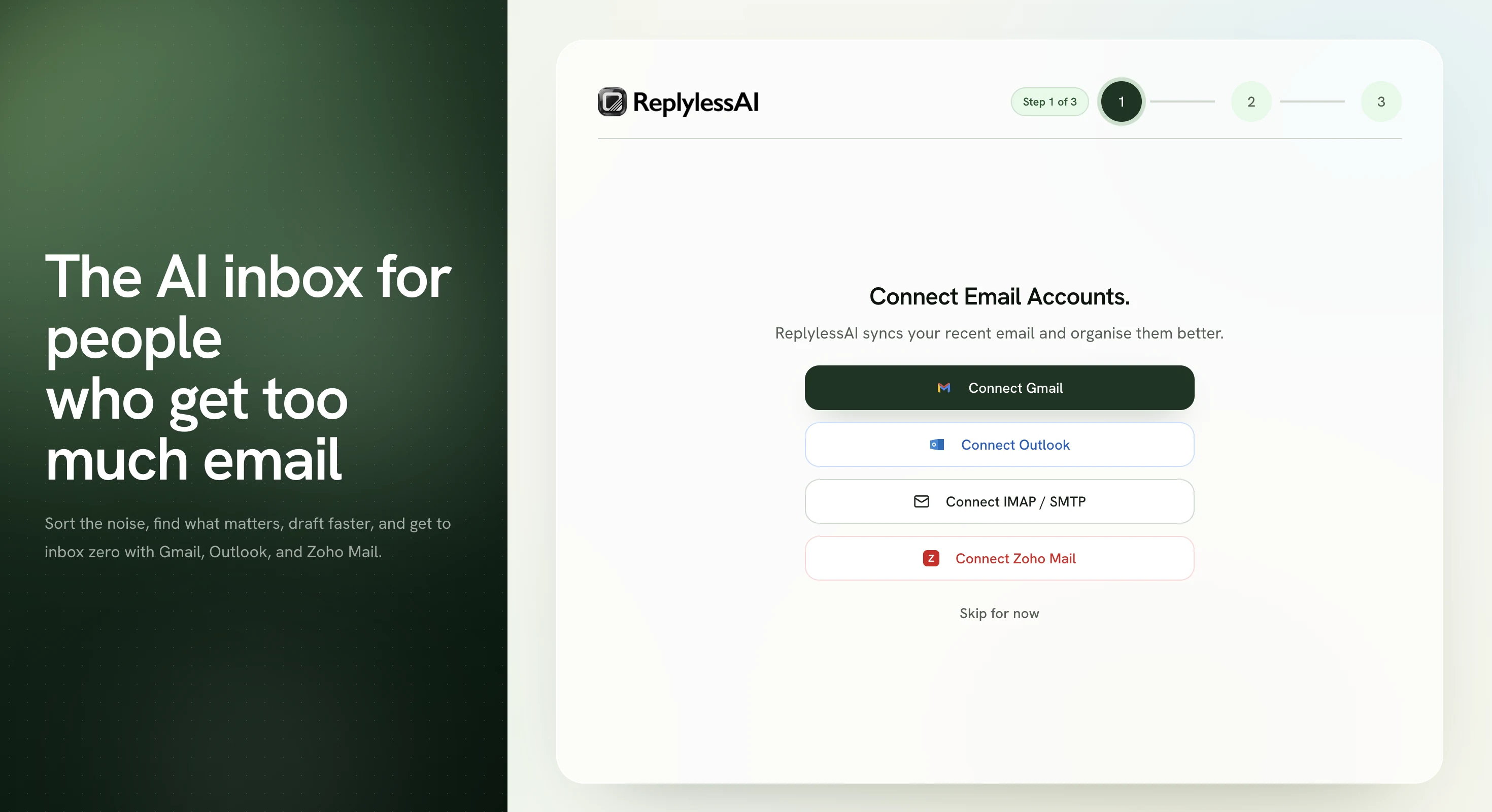
ReplylessAI onboarding screen showing a three-step flow for connecting Gmail, Outlook, IMAP SMTP, or Zoho Mail
Account Connection · A guided first step that supports major providers while making progress and optional setup explicit
02

AI-First Design-to-Production Workflow

01
Frame the Product Thesis

I used the Antler MENA cohort environment to sharpen the audience, workflow problem, product promise, and MVP scope before committing to interface directions.

Product Strategy MVP Definition Antler MENA
02
Design the System, Not Isolated Screens

I defined the information architecture, intent-based inbox model, interaction patterns, visual language, and reusable components as one coherent product system.

Figma Interaction Design Design System
03
Vibe-code the Working Platform

Using AI coding agents, I converted design intent into a functional React application, directing implementation through structured prompts, product specifications, acceptance criteria, and continuous visual QA.

AI Coding Agents React/Vite Supabase
04
Validate, Refine, and Ship

I reviewed generated implementation against the intended user flows, corrected interaction and hierarchy gaps, refined the experience across breakpoints, and deployed the product and marketing surfaces.

Design QA Responsive Validation Vercel
03

Core Design Decisions

01
Categorise by Intent, Not by Generic Labels

Instead of forcing users into a traditional unread/starred/archive workflow, I designed the inbox around real-world mental buckets: Important, Job Applications, Payments, Newsletters, Updates, and Other. This gives structure immediately and reduces the "where do I even start?" problem.

02
Keep Action Near the Message

Quick actions like remind, complete, and delete live where the user is already looking. The goal was to remove toolbar hunting and make triage feel lightweight enough to do continuously instead of in long cleanup sessions.

03
Make AI Feel Like a Collaborator

The AI assistant was designed as an on-demand layer over the inbox, not a takeover. Users can search messages, find tasks, draft replies, and summarise threads inside a familiar chat surface while still keeping the original email context visible.

AI Assistant Inbox Search Thread Summaries
04
Balance Utility With a Product Worth Trying

The visual direction uses soft gradients, light surfaces, and simple iconography to make a productivity tool feel approachable. The website and product were designed to tell the same story: this is serious software, but it should still feel easy to start using.
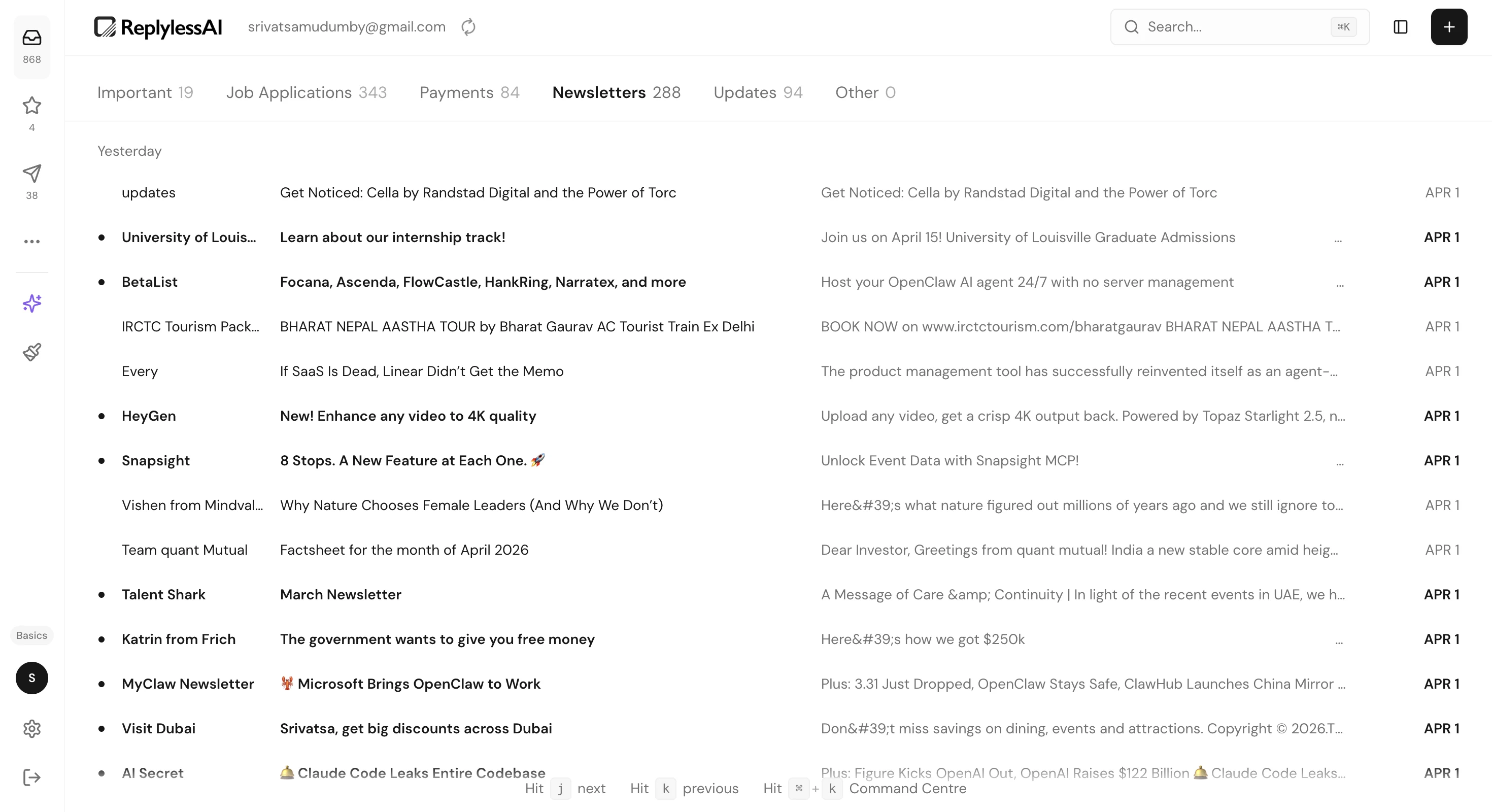
ReplylessAI newsletter category view showing categorized email rows
Category View · A dedicated newsletter lane that keeps lower-priority reading out of the urgent workflow
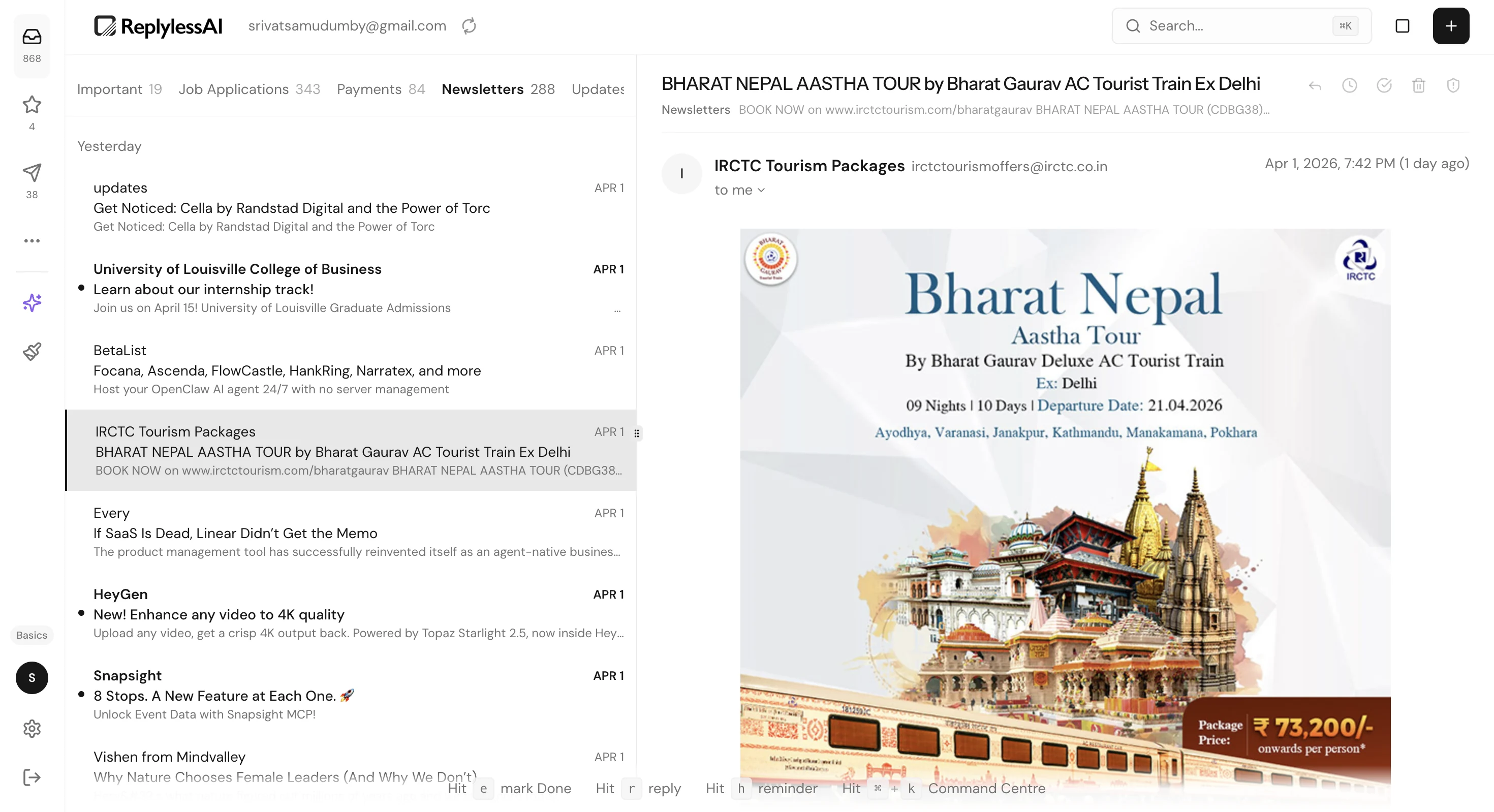
ReplylessAI email detail view with selected message and reading pane
Reading Experience · Thread detail stays clean and spacious while preserving fast access to surrounding context
Quick Actions · Lightweight action affordances designed for fast triage without breaking focus
AI Assistant · Conversational overlay for asking inbox questions, finding threads, and drafting responses
04

Product & Delivery Value

Clear
Priority Structure
The category system helps users understand their inbox at a glance instead of reading every sender and subject line equally.
Fast
Action-Oriented Workflow
Key actions are surfaced inline so common tasks feel immediate, reducing the friction of processing messages one by one.
Built
Design-to-Production Ownership
A fully AI-first workflow carried the same product intent from strategy and interface design into a functioning, deployed platform.
05

Key Learnings

01
AI needs a clear job
The strongest AI moments were specific: summarise, search, draft, and surface follow-ups. Broad "assistant" positioning feels vague unless the UI anchors it in real user tasks.
02
Categorisation creates calm
The biggest UX win wasn’t animation or novelty. It was immediately reducing visual noise so users could tell what mattered and what could wait.
03
AI-first delivery needs precise direction
AI-assisted coding accelerated implementation when every prompt was grounded in user flows, system states, component rules, and clear acceptance criteria. The speed came from structured product decisions—not from skipping design.
04
Design ownership continues into the build
Working directly through implementation made visual QA, responsive behaviour, and interaction refinement part of the design process instead of a separate handoff phase.
06

Early adoption and Antler

I joined Antler MENA as an Entrepreneur in Residence from April to June 2026, selected from 5,000+ applicants. I used the programme to take Replyless from product thesis to working software.

Replyless reached 70+ early users as I took the product from thesis to working software during the programme.

Have something in mind?

Let's make it work.

Ex-Founder, Product Manager & Designer. Based in Dubai.