mndr.ai
Collaborated with the mndr.ai team during Antler MENA on product design, go-to-market strategy and zero-to-one direction for AI agents serving e-commerce and D2C marketing.
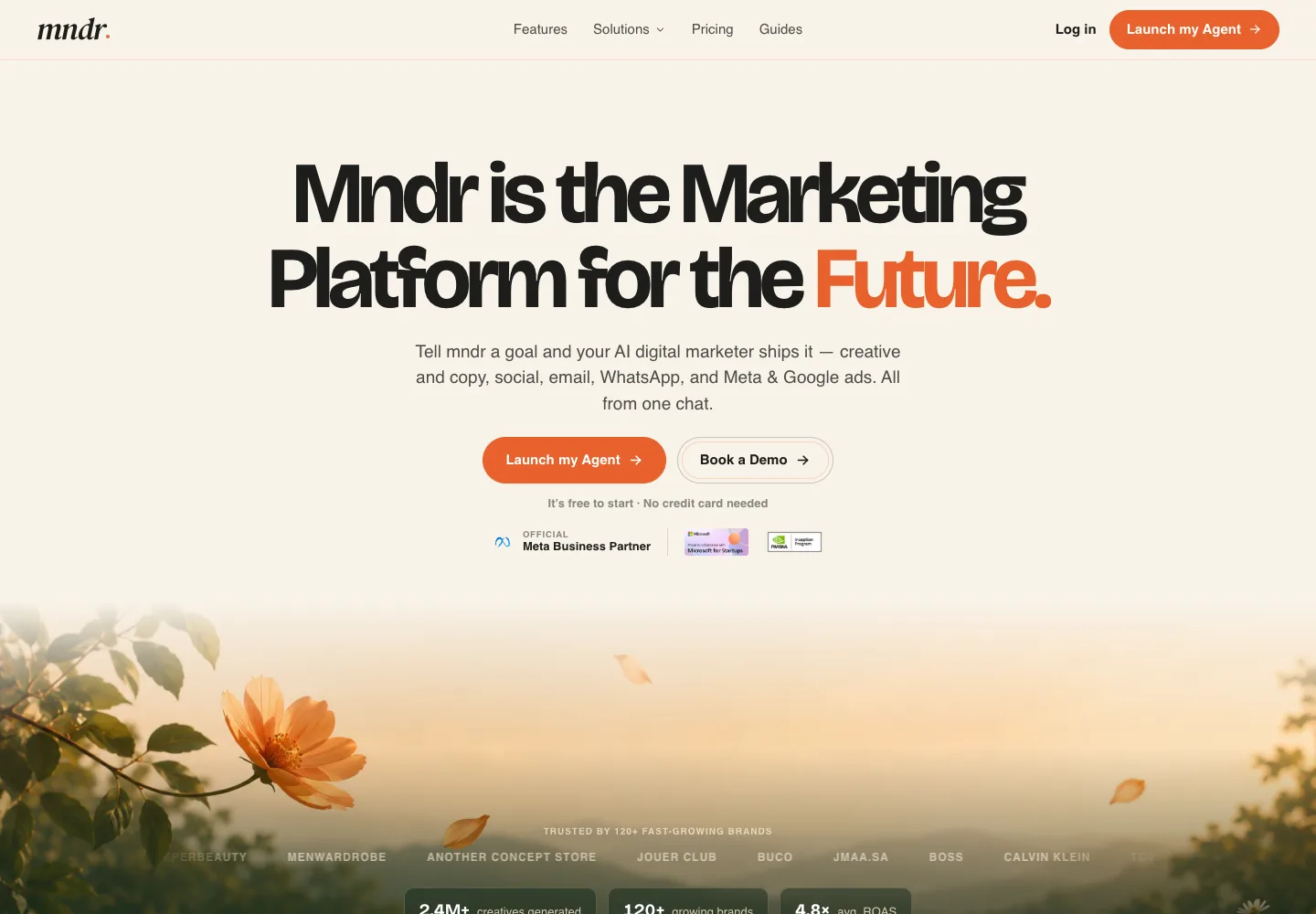
A clearer starting point for AI marketing
E-commerce and direct-to-consumer marketing involves a chain of decisions: what to promote, who to reach, which channel to use and how to interpret the response. For a small brand team, that work competes with the everyday demands of running the business. AI agents offer a way to take on parts of this workload, but their value depends on the marketing task they help a team complete.
During the Antler MENA cohort in Dubai in 2026, I collaborated with the mndr.ai team on product design, go-to-market strategy and zero-to-one direction. I contributed alongside the team, connecting the product experience with the needs of e-commerce and D2C marketers.
Designing around the marketer’s task
My product design contribution centred on making AI marketing understandable as a working experience. The useful starting point is the marketer’s objective: a product launch, a campaign or a customer message. From there, the experience needs to explain what the agent can contribute and what information it needs.
For this category, the important design considerations include how brand context enters the workflow, how generated work can be reviewed and where the marketer retains control. Those considerations frame the design problem: a team needs to understand an agent’s proposed action before trusting it with customer-facing work.
Brand context
Product information, audience and tone give marketing work a usable starting point.
Visible control
A clear boundary between suggested work and customer-facing action helps a marketer judge what happens next.
Useful feedback
Campaign information needs to support the next decision, with enough context to interpret the result.
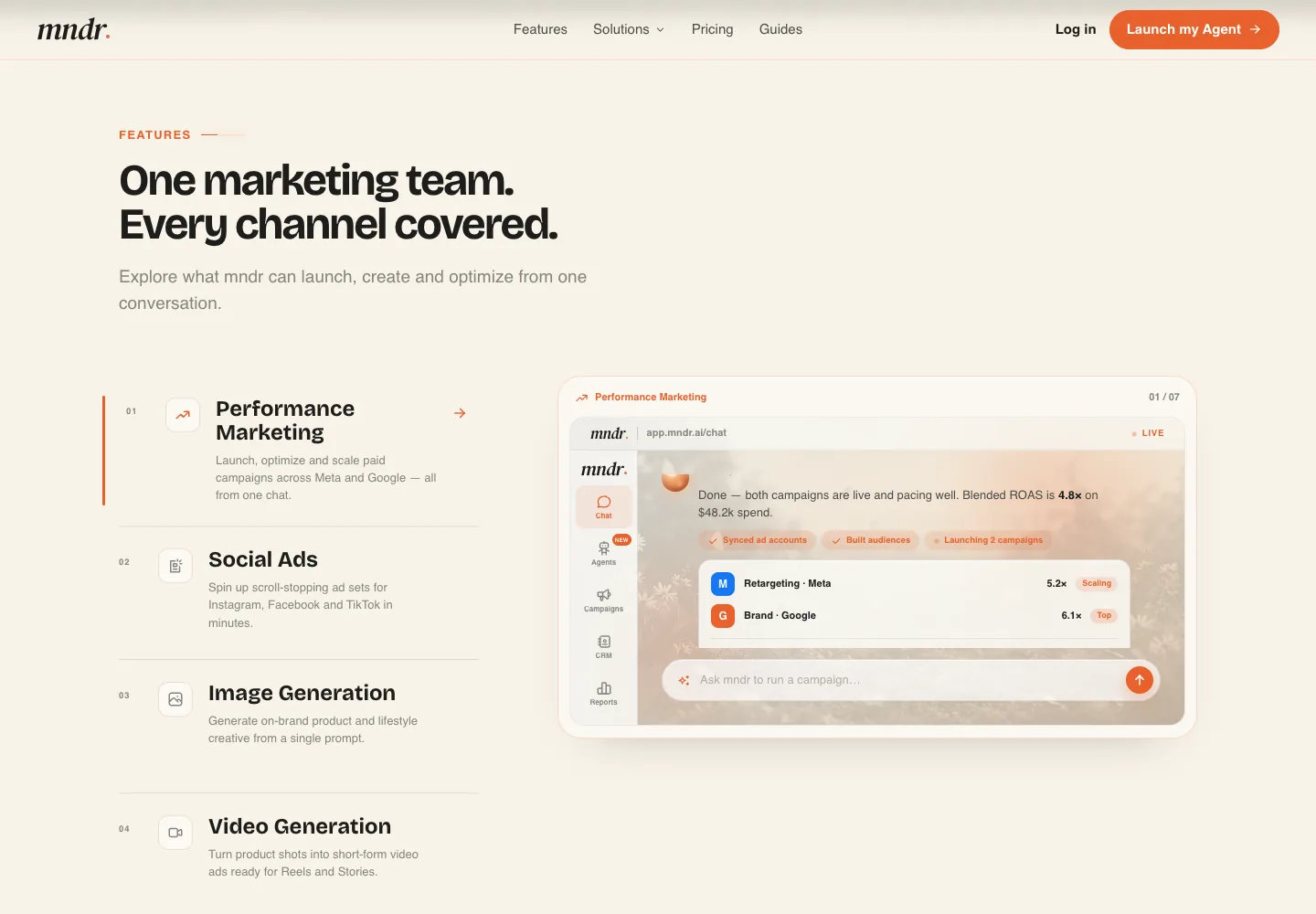
Making the value proposition specific
I also contributed to go-to-market strategy. For e-commerce and D2C teams, “AI agents” describes the mechanism; the market proposition needs to describe the work a brand can accomplish. Positioning and product design therefore needed to be considered together.
The strategic question was where the product could provide a clear starting point in a marketer’s workload. A focused use case gives the product experience a purpose and gives the team a more concrete way to explain its value. This was the connection between my GTM contribution and the zero-to-one product direction.
Zero-to-one product direction
My zero-to-one contribution connected three questions: which marketing task to address first, what the user needed to understand to use the product, and how to explain its value to a brand team. Product design and GTM were linked parts of that early direction.
The scope of my cohort work was product design and strategic input with the mndr team. That meant contributing to the product experience, the value proposition and the initial market focus together, rather than treating the interface and the launch story as separate exercises.
Have something in mind?
Let's make it work.
Ex-Founder, Product Manager & Designer. Based in Dubai.