Redesigned the digital savings-account KYC journey to make PAN/Aadhaar verification, customer details, consent, video KYC, saved progress, and failure recovery feel more understandable and less brittle.
Project Type
Digital account-opening design study · IndusInd KYC journey
KYC flow model · Balsamiq-style wireframes · Validation plan
IndusInd digital KYC / Selected product view
6
KYC journey moments mapped
4
Low-fidelity wireframe states
End-to-end
Onboarding journey redesigned
Resume-first
Progress and recovery model
Delivered: proposed journey, wireframes, interaction states, and a validation plan.
Problem
Digital KYC flows often fail at identity mismatch, OTP, consent, or video steps without giving users a clear path back.
Ownership
Flow framing, information hierarchy, recoverable states, progress model, and wireframe interaction design.
Constraints
Identity proofing, consent clarity, document readiness, video KYC preparation, and assisted-review escalation.
Outcome
A redesigned KYC journey that treats every interruption as a recoverable state instead of a dead end.
01
The Opportunity
Account opening has a simple user goal: get verified and open the account. The product reality is more fragile. PAN, Aadhaar OTP, customer details, consent language, and video KYC each create a possible exit point.
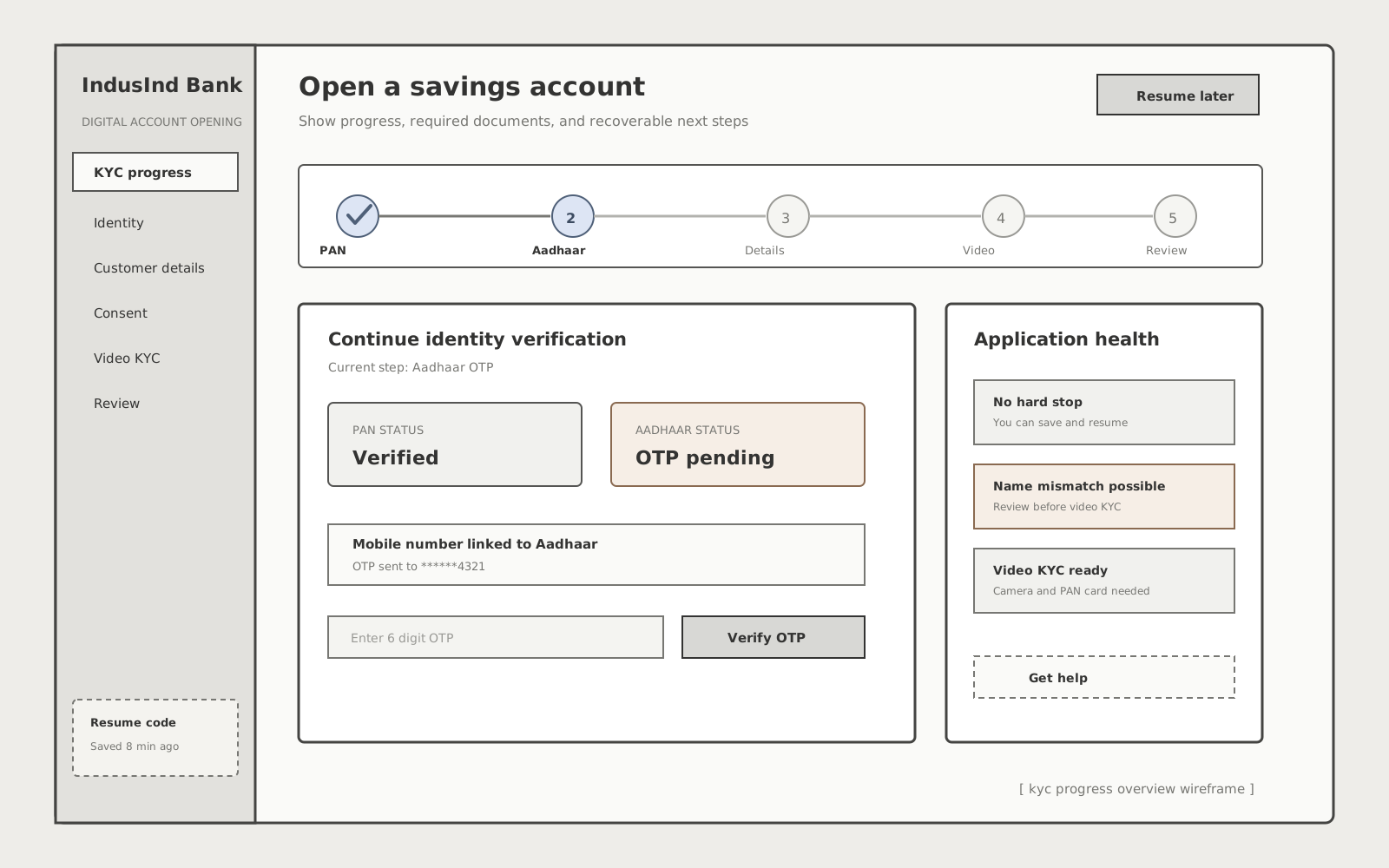
The redesign focused on one principle: make progress visible and failure recoverable. A user should always know what is done, what is blocked, why it is blocked, and how to continue.
Make verification feel like a guided journey—not a sequence of opaque compliance gates.
The flow is structured around the practical account-opening sequence: PAN verification, Aadhaar OTP, customer details, consent, video KYC, review, and account activation.
Design question: How might a digital KYC flow reduce anxiety and drop-off by turning unclear interruptions into specific, fixable next steps?
KYC Progress Overview · A saved journey view that keeps verification status, blockers, and the next action visible
02
User Journey
1
PAN & Aadhaar
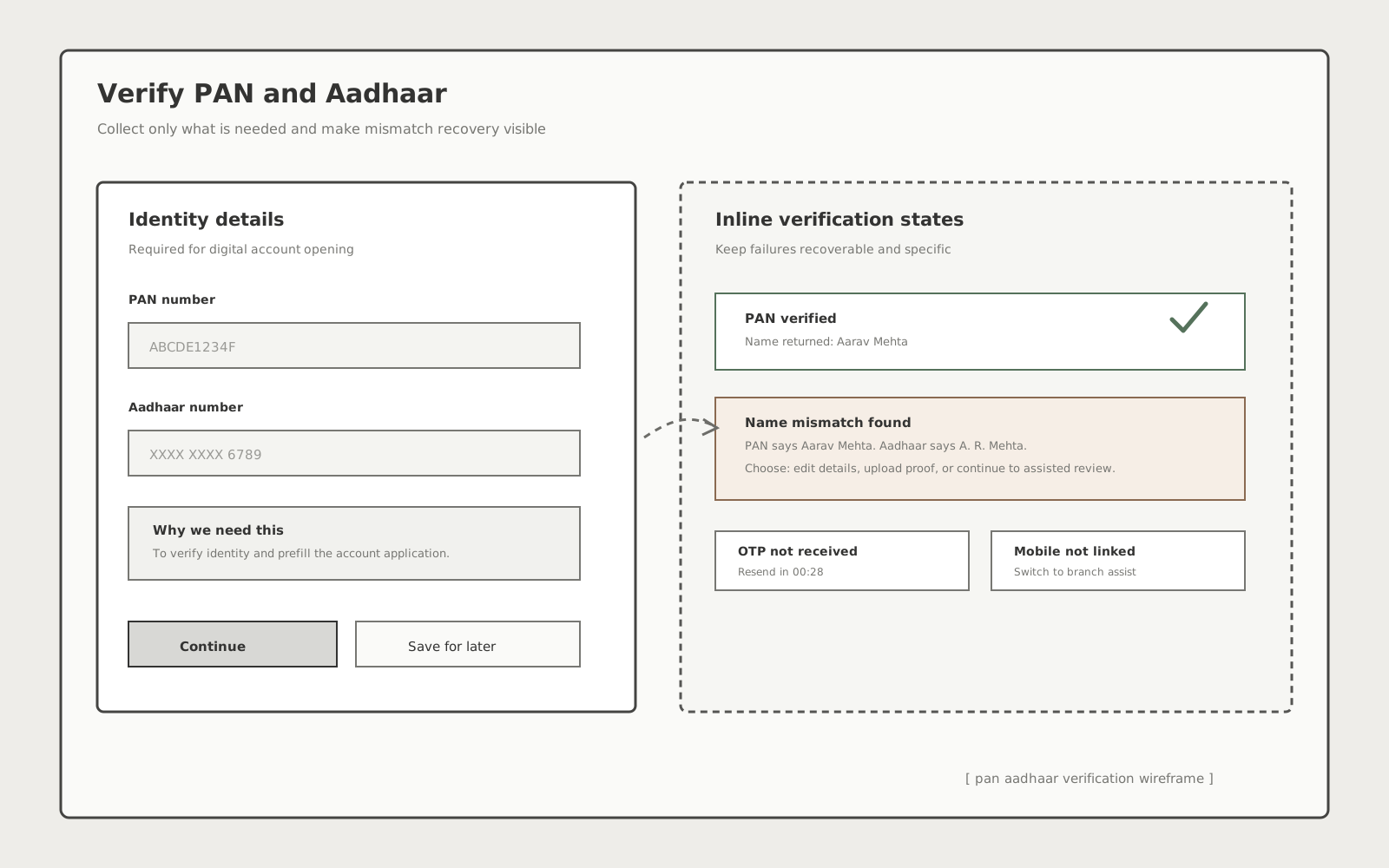
Verify identity with clear masking, OTP state, and a plain reason for each requested field.
2
Customer Details
Prefill what can be trusted, highlight mismatches, and avoid asking users to retype known information.
3
Consent
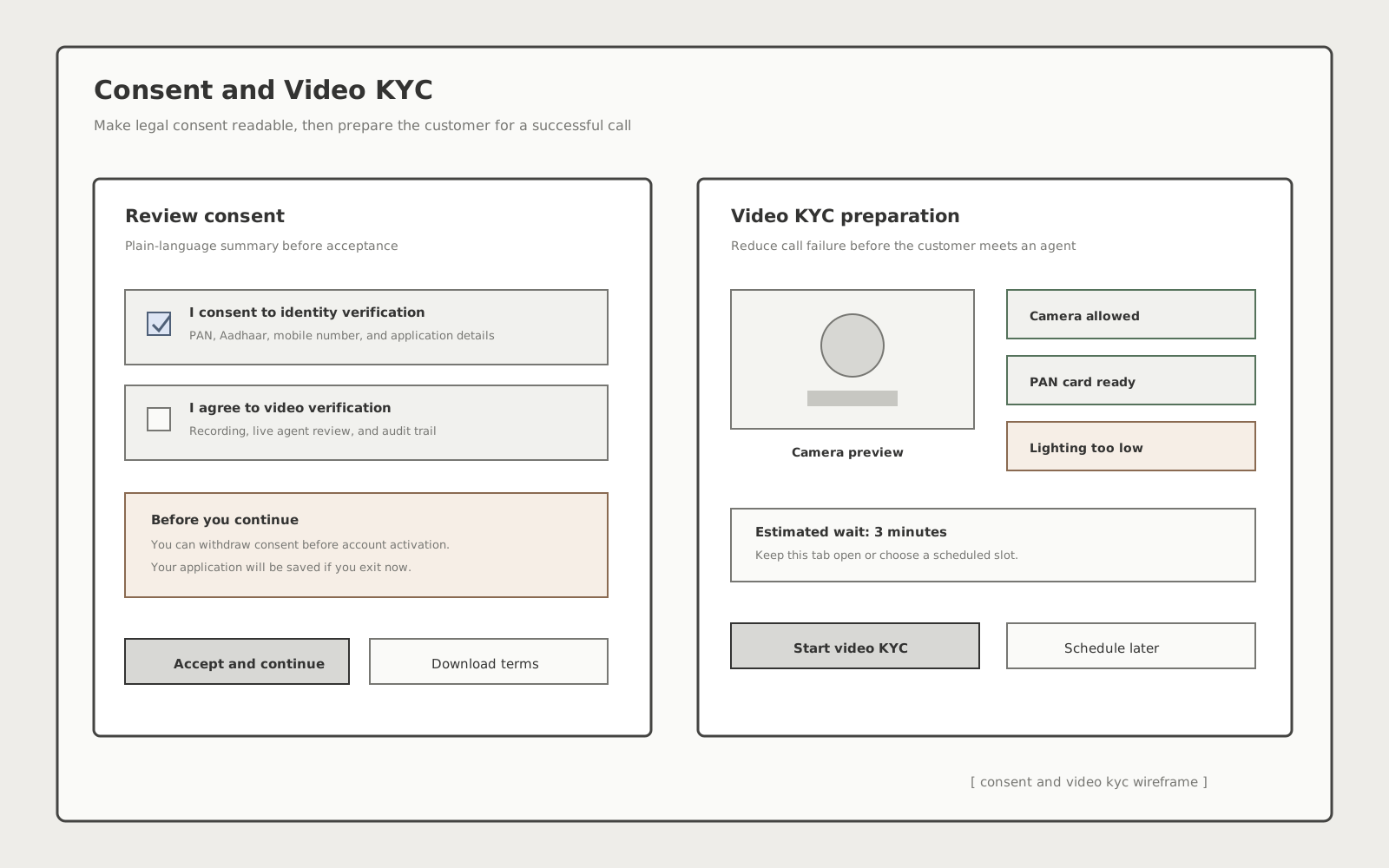
Turn legal acceptance into a readable summary with scope, recording, review, and withdrawal cues.
4
Video KYC
Prepare camera, lighting, document readiness, and wait time before the customer meets an agent.
03
Design Principles
01
Status before forms
Show what is verified, pending, failed, and saved before asking for the next input.
02
Recovery over rejection
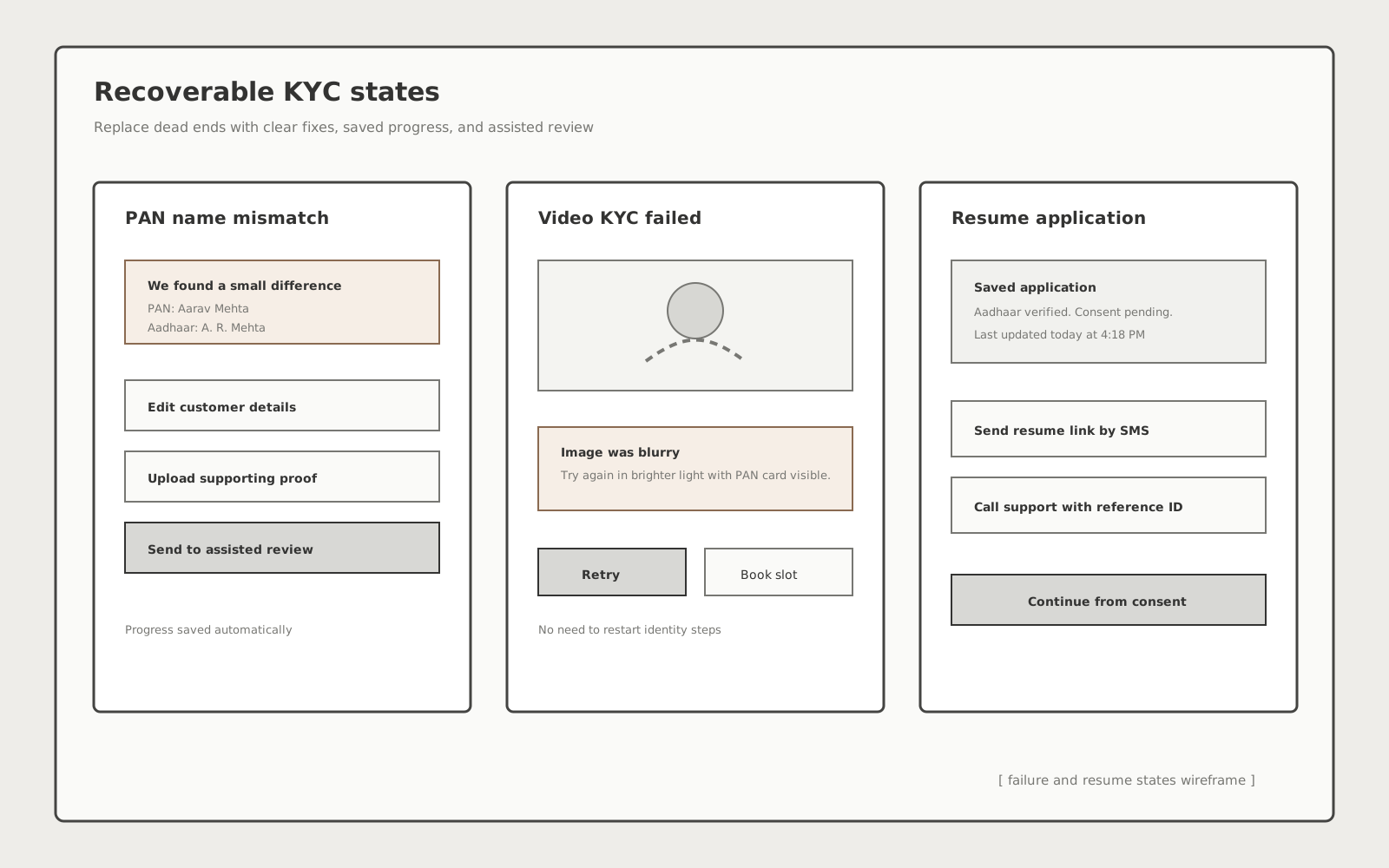
Name the issue and offer specific options: edit, upload proof, retry, schedule, or assisted review.
03
Consent in plain language
Keep the legal step serious without hiding what data is used, recorded, reviewed, or retained.
PAN & Aadhaar Verification · Specific mismatch and OTP states replace vague error messagingConsent + Video KYC · Legal review and call readiness are handled before the customer reaches a live agent
Recoverable Failure States · Mismatch, blurry video, and resume flows keep the user moving without restarting
04
Key Design Decisions
01
Expose the journey map
A persistent progress model lowers uncertainty because users can see where they are and what remains.
02
Treat mismatch as normal
Name differences, OCR issues, and OTP delays are designed as expected branches, not unexpected failures.
03
Save before risky steps
Consent and video KYC have high exit risk, so the flow makes saved progress and resume links explicit.
04
Prepare for video success
Camera, lighting, document, and wait-time checks prevent avoidable call failures before the agent joins.
05
Validation Plan
The redesigned flow creates a clear validation focus for first-time account openers: clarity, confidence, and recovery comprehension across the moments most likely to cause drop-off.
01
Progress Clarity
Can users explain which KYC steps are complete, pending, and blocking the account?
02
Mismatch Recovery
Can users choose the right next step when PAN and Aadhaar names differ?
03
Video Readiness
Can users prepare documents, lighting, camera access, and scheduling without support?
This case study focuses on the redesigned journey, system thinking, and recoverable KYC states rather than confidential product metrics.
Have something in mind?
Let's make it work.
Ex-Founder, Product Manager & Designer. Based in Dubai.